Botulinum toxin: what it is, how it works and when to start.
Aesthetic Medicine
Botulinum toxin: what it is, how it works and when to start.
It is the most performed non-surgical aesthetic procedure in the world4 — and one of the most surrounded by myths. Here is, plainly, what you can (and cannot) expect.
Helder Moreira · 14 October 2026 · 3 min de leitura
In short
It temporarily relaxes the muscles that create expression lines3.
It starts working in 2–5 days, peaks at 2 weeks and lasts 3–4 months2,5.
Well dosed, it softens without “freezing” — your expressions stay yours1.
How it works
Botulinum toxin type A is a prescription-only medicine that temporarily and locally blocks the signal between nerve and muscle. The treated muscle contracts less, so the skin above it creases less. Over time, lines that were visible at rest also soften3,5.
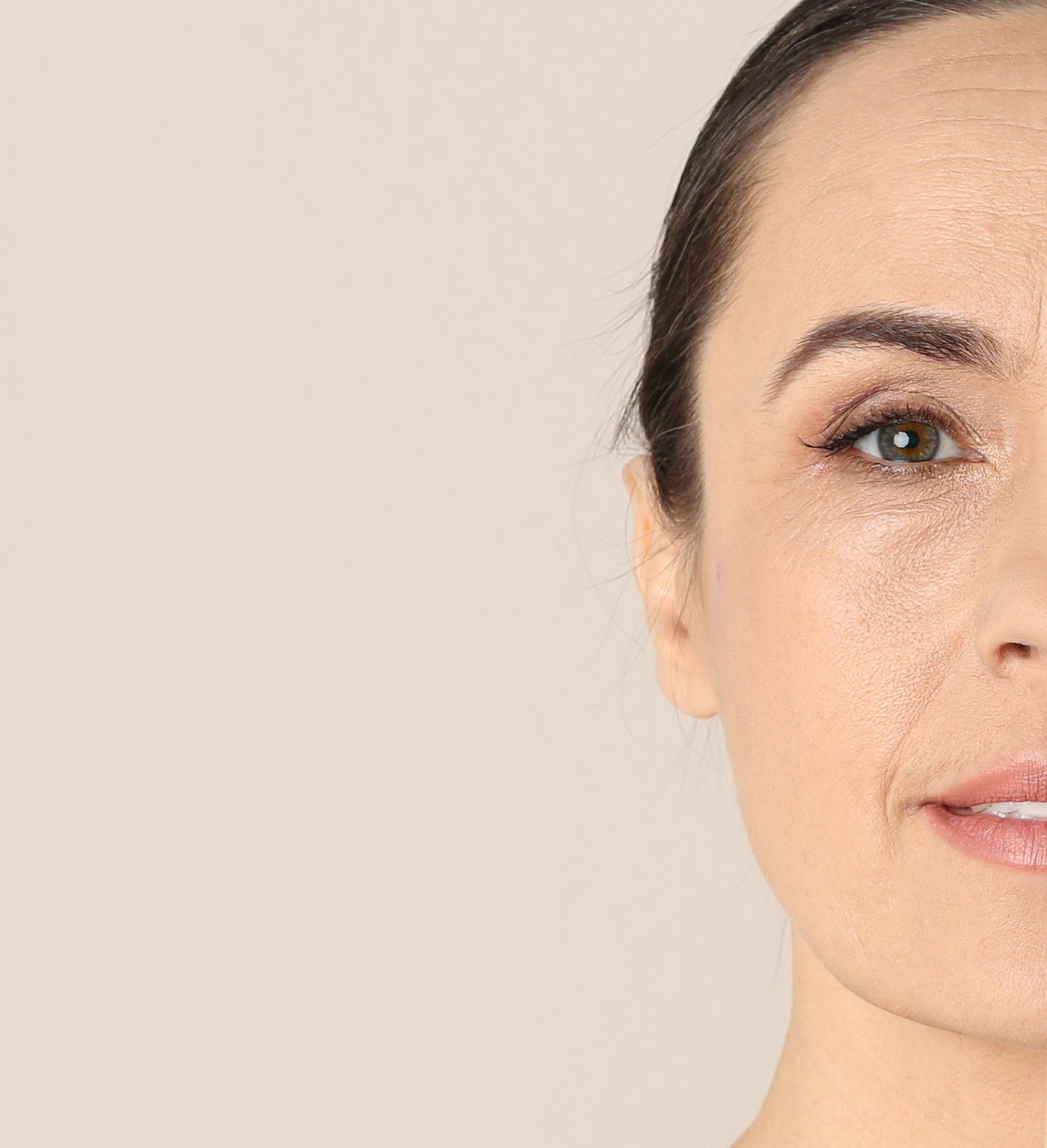
It works mainly on dynamic lines — those that appear when you frown, smile or raise your eyebrows. It does not add volume or treat sagging: other treatments do that1.
10–15 minutes with very fine needles. Back to your routine the same day.
2–5 days
Onset
Movement starts to soften.
14 days
Full effect
The ideal time for a review appointment.
3–4 months
Gradual return
The muscle slowly recovers. Repeat treatments maintain the result.
When should you start?
There is no right age. It makes sense when expression lines start to show at rest, or when they bother you. International data show it is most sought after between 35 and 504; many people start with low doses, to soften lines without losing expression. The goal is not to look 20: it is to look rested.
Myths and facts
✕ Myth
“My face will look frozen.”
✓ Fact
The dose is tailored to each muscle. Done well, expressions stay natural1.
✕ Myth
“It’s dangerous — it’s a toxin.”
✓ Fact
Tiny doses of a medicine used in medicine for over 30 years, administered by doctors3.
It is not suitable during pregnancy or breastfeeding, with neuromuscular diseases or with an active infection in the area6. That is why every treatment starts with a medical consultation.
Every face and every skin is different. Book an assessment: we review your case and design a personalised treatment plan with you, with realistic goals.
Physician accredited in Aesthetic Medicine · Portuguese Medical Association (Ordem dos Médicos) — licence no. 55532
Patient information
The procedures and treatments mentioned in this article require a prior individual medical assessment and, in some cases, a medical prescription. Indications, results and their duration vary from person to person and cannot be guaranteed. This article is for information only and does not replace a medical consultation.
FACELAB Albufeira — Rua do Estádio, Quinta da Bela Vista, Lote 2, 8200-127 Albufeira · ERS Registration Certificate: E172446 · Operating licence: 24619/2024
FACELAB Faro — Rua da PSP, n.º 22, 8000-408 Faro · ERS Registration Certificate: E180121 · Operating licence: 26536/2025
References
Carruthers J, Fagien S, Matarasso SL; Botox Consensus Group. Consensus recommendations on the use of botulinum toxin type A in facial aesthetics. Plast Reconstr Surg. 2004;114(6 Suppl):1S–22S.
Sundaram H, Signorini M, Liew S, et al. Global Aesthetics Consensus: Botulinum toxin type A — evidence-based review, emerging concepts, and consensus recommendations for aesthetic use, including updates on complications. Plast Reconstr Surg. 2016;137(3):518e–529e.
Nigam PK, Nigam A. Botulinum toxin. Indian J Dermatol. 2010;55(1):8–14.
International Society of Aesthetic Plastic Surgery (ISAPS). ISAPS International Survey on Aesthetic/Cosmetic Procedures performed in 2023. 2024.
Satriyasa BK. Botulinum toxin (Botox) A for reducing the appearance of facial wrinkles: a literature review of clinical use and pharmacological aspect. Clin Cosmet Investig Dermatol. 2019;12:223–228.
INFARMED, I.P. Resumo das Características do Medicamento (RCM) das toxinas botulínicas tipo A autorizadas para uso estético. Base de dados INFOMED.